
Gardening · Frost dates
Frost dates by postcode: your last spring frost and first autumn frost, 2026–27
Enter your postcode for the date it’s safe to plant tender plants out, and the date to have them back under cover, worked out for your own neighbourhood from fifteen years of Met Office records.
The short answer: in most of England and Wales tender plants are safe outside from early May (tomatoes, courgettes and beans are better waiting until late May, when nights warm up), and should be back under cover by late October. The north, the uplands and frost pockets run weeks later in spring and earlier in autumn; cities and the south-west coast, weeks the other way.
Find your frost dates
Met Office data on a 1km grid, 2009–2023. How we work these out
What your frost dates mean
Each season gets two dates, and the difference between them is the whole point.
- The typical date is the middle of the range. The typical last spring frost is the date by which frost has gone in half of years; the typical first autumn frost is the date it has arrived by in half of years. Planting out on the typical date is a coin toss.
- The safe planting-out date is later on purpose. In 9 springs out of 10, the last frost had been and gone by then. It is the one to plan dahlias and bedding around, and the earliest date for anything tender.
- The bring-in date is earlier on purpose. In 1 autumn in 10, the first frost had already arrived by then. Have anything tender and precious under cover by this date and you’ll rarely be caught out.
Our dates are for air frost: the air at about head height falling to 0°C or below, which is how the Met Office measures it. Low-growing seedlings sit in colder air than that, and a ground frost can whiten the lawn when the air is a few degrees above freezing. Treat a forecast low of 3°C or below on a clear, still night as a frost warning for anything at soil level.
The dates describe your 1km neighbourhood, not your garden. A frost pocket at the bottom of a slope, an exposed hilltop or a garden in a valley runs colder: add a week or two in spring and take a week or two off in autumn. A walled town garden or a sheltered, south-facing wall runs warmer: it can often go a week earlier in spring and hold on a week longer in autumn. A max–min thermometer at plant height for a few weeks will tell you which kind of garden you have.
Frost dates for UK towns and cities
The dates below are for the postcode sector at the centre of each place. Suburbs and the countryside around them can differ by weeks: Manchester’s city centre can plant out almost four weeks before Birmingham’s, and Buxton, about 20 miles from Manchester, has a shorter frost-free season than 99% of England. Use the postcode tool for your own garden.
Green runs from the safe planting-out date to the bring-in date for the postcode sector at the centre of each place. Hatched blue is frost risk.
| Place (postcode sector) | Typical last frost | Safe to plant out | Bring in by | Typical first frost | Frost-free days |
|---|---|---|---|---|---|
| England | |||||
| Bath (BA1 1) | 29 Mar | 18 Apr | 31 Oct | 20 Nov | 196 |
| Birmingham (B1 1) | 15 Apr | 8 May | 28 Oct | 17 Nov | 173 |
| Brighton (BN1 1) | 15 Mar | 5 Apr | 12 Nov | 29 Nov | 221 |
| Bristol (BS1 1) | 24 Mar | 14 Apr | 30 Oct | 18 Nov | 199 |
| Buxton (SK17 6) | 27 Apr | 10 May | 8 Oct | 6 Nov | 151 |
| Cambridge (CB2 1) | 22 Apr | 9 May | 28 Oct | 6 Nov | 172 |
| Canterbury (CT1 1) | 5 Apr | 22 Apr | 30 Oct | 22 Nov | 191 |
| Carlisle (CA1 1) | 17 Apr | 6 May | 23 Oct | 5 Nov | 170 |
| Durham (DH1 1) | 1 May | 10 May | 13 Oct | 6 Nov | 156 |
| Exeter (EX1 1) | 6 Apr | 3 May | 31 Oct | 16 Nov | 181 |
| Gloucester (GL1 1) | 29 Mar | 19 Apr | 24 Oct | 9 Nov | 188 |
| Harrogate (HG1 1) | 28 Apr | 11 May | 16 Oct | 5 Nov | 158 |
| Hereford (HR1 1) | 21 Apr | 2 May | 23 Oct | 4 Nov | 174 |
| Ipswich (IP1 1) | 6 Apr | 25 Apr | 7 Nov | 22 Nov | 196 |
| Isles of Scilly (TR21 0) | 13 Jan | 25 Feb | Frost rare | Frost rare | 309 |
| Kendal (LA9 4) | 28 Apr | 14 May | 18 Oct | 2 Nov | 157 |
| Leeds (LS1 1) | 14 Apr | 7 May | 28 Oct | 22 Nov | 174 |
| Leicester (LE1 1) | 15 Apr | 1 May | 28 Oct | 8 Nov | 180 |
| Lincoln (LN1 1) | 17 Apr | 3 May | 27 Oct | 9 Nov | 177 |
| Liverpool (L1 1) | 15 Mar | 7 Apr | 2 Nov | 26 Nov | 209 |
| London (Westminster) (SW1A 1) | 27 Feb | 5 Apr | 21 Nov | 30 Nov | 230 |
| Manchester (M1 1) | 21 Mar | 12 Apr | 2 Nov | 29 Nov | 204 |
| Newcastle upon Tyne (NE1 1) | 9 Apr | 27 Apr | 27 Oct | 9 Nov | 183 |
| Norwich (NR2 1) | 18 Apr | 3 May | 5 Nov | 19 Nov | 186 |
| Nottingham (NG1 1) | 25 Mar | 13 Apr | 8 Nov | 25 Nov | 209 |
| Oxford (OX1 1) | 2 Apr | 24 Apr | 31 Oct | 13 Nov | 190 |
| Penzance (TR18 2) | 12 Feb | 16 Mar | 27 Nov | 30 Dec | 256 |
| Plymouth (PL1 1) | 4 Mar | 5 Apr | 25 Nov | 2 Dec | 234 |
| Sheffield (S1 1) | 27 Mar | 19 Apr | 14 Nov | 29 Nov | 209 |
| Shrewsbury (SY1 1) | 17 Apr | 30 Apr | 27 Oct | 8 Nov | 180 |
| Southampton (SO14 0) | 2 Apr | 18 Apr | 2 Nov | 22 Nov | 198 |
| Truro (TR1 1) | 11 Mar | 9 Apr | 16 Nov | 29 Nov | 221 |
| York (YO1 7) | 18 Apr | 5 May | 31 Oct | 13 Nov | 179 |
| Wales | |||||
| Aberystwyth (SY23 1) | 14 Apr | 4 May | 28 Oct | 22 Nov | 177 |
| Cardiff (CF10 1) | 31 Mar | 23 Apr | 29 Oct | 20 Nov | 189 |
| Llandudno (LL30 1) | 11 Feb | 20 Mar | 26 Nov | 20 Dec | 251 |
| Swansea (SA1 1) | 19 Feb | 24 Mar | 25 Nov | 4 Dec | 246 |
| Scotland | |||||
| Aberdeen (AB10 1) | 12 Apr | 1 May | 1 Nov | 16 Nov | 184 |
| Aviemore (PH22 1) | 20 May | 7 Jun | 12 Sep | 10 Oct | 97 |
| Dumfries (DG1 1) | 20 Apr | 6 May | 16 Oct | 5 Nov | 163 |
| Dundee (DD1 1) | 15 Apr | 7 May | 20 Oct | 9 Nov | 166 |
| Edinburgh (EH1 1) | 17 Apr | 4 May | 22 Oct | 9 Nov | 171 |
| Fort William (PH33 6) | 1 May | 14 May | 26 Sep | 23 Oct | 135 |
| Glasgow (G1 1) | 4 Apr | 4 May | 27 Oct | 21 Nov | 176 |
| Inverness (IV1 1) | 21 Apr | 5 May | 21 Oct | 6 Nov | 169 |
| Northern Ireland | |||||
| Belfast (BT1 1) | 15 Apr | 28 Apr | 1 Nov | 23 Nov | 187 |
Across the UK, the safe planting-out date runs from 25 February on the Isles of Scilly to 14 June in the highest inland glens of Sutherland, and the bring-in date from 27 August around Dalwhinnie to the very end of December on Scilly. Half of all UK postcode sectors are safe to plant out by 3 May and should have tender plants in by 28 October.
Frost date map of the UK
The same data, square kilometre by square kilometre. Height matters as much as latitude: the Highlands, the Southern Uplands, the Pennines and the Welsh hills bring the autumn frost weeks early, the high ground keeps spring late, and the coasts and the big cities run mild.

When to plant out tender plants
Your safe date tells you when frost has gone, not when it is warm. Tomatoes, courgettes, squash, beans, sweetcorn and basil stall on nights below about 10°C, so where your safe date falls in March or April, hold them back until nights warm up, which in most of the UK means mid to late May or early June. Summer bedding can go out from the safe date itself.
How to harden off plants
Start two to three weeks before you mean to plant out. The RHS method, if you have no cold frame:
- Week one: outside by day in a sheltered spot in front of a south-facing wall or hedge, under two layers of fleece, and back indoors at night.
- Week two: down to one layer of fleece, and out at night too unless frost is forecast.
- Week three: fleece off by day, then off altogether. Plant out once your safe date has passed and the forecast is kind.
If a frost is forecast at any stage, bring them back in. Count back from your planting-out date to work out when to sow.
| Plant | Sow or start under cover | Plant out |
|---|---|---|
| Tomatoes (outdoor) | Late March to mid April, six to eight weeks before planting out | After your safe date, once nights stay above about 10°C: late May or early June in most places, in the warmest spot you have |
| Courgettes, squash & pumpkins | About four weeks before planting out, one seed on its edge per pot | After your safe date once nights are mild, usually late May or early June |
| Runner & French beans | About four weeks before, in deep pots; or sow direct from late May, once the soil has warmed | After your safe date once nights are mild, usually late May or early June |
| Sweetcorn | About four weeks before, in deep modules | After your safe date once nights are mild, in a block rather than a row so it pollinates |
| Outdoor cucumbers | Three to four weeks before | Early June in most places; they sulk on cold nights |
| Chillies & peppers | February to March, somewhere warm | Most do better under glass; outdoors only in June, against a warm wall |
| Basil | Indoors from March to June | Outside in June, in a warm, sheltered spot; it blackens on cold nights |
| Dahlias & cannas | Pot up tubers and rhizomes under cover in March or April | From your safe date |
| Summer bedding (pelargoniums, fuchsias, begonias) | Buy as plugs or young plants | From your safe date; keep them under cover until then, however early the garden centre sells them |
Growing tomatoes from scratch? Our step-by-step guide to growing tomatoes from seed works back from the same planting-out date, and growing tomatoes covers everything after that.
When to bring tender plants in for winter
Work to your bring-in date for anything you’d hate to lose, and to the typical first frost for the plants that are better left until the frost has done its work.
| Plant | What to do | When |
|---|---|---|
| Pelargoniums (geraniums) | Bring pots into a frost-free greenhouse, porch or cool, bright windowsill; keep them barely moist through winter | By your bring-in date |
| Tender fuchsias & salvias in pots | Move under cover; hardy fuchsias and most hardy salvias can stay out | By your bring-in date |
| Citrus | Indoors to a cool, bright room or conservatory, not a centrally heated sitting room | When nights start dropping below about 7°C, usually late September to early October |
| Olives & bay in pots | Hardier than citrus but the roots in a pot are exposed: move against the house wall and wrap the pot, or fleece the plant in cold areas | By your bring-in date |
| Dahlias & cannas | Wait for the first frost to blacken the leaves, then cut down, lift the tubers (dahlias) or rhizomes (cannas), dry them off and store frost-free. In mild areas many gardeners leave them in under a thick mulch | Once frost has blackened the foliage, usually around your typical first frost |
| Tuberous begonias | Lift or bring pots in and let them dry off | By your bring-in date |
| Tree ferns & bananas | Pack the crown or stem with straw and wrap in fleece | By your typical first frost |
| The last tomatoes & chillies | Pick green tomatoes to ripen indoors; bring potted chillies in to overwinter | Before your bring-in date |
Autumn is also the season for jobs that like the cold: garlic goes in from October, and if you’re tidying, leave a corner and a hedgehog house for the visitors that hibernate through it.
How to protect plants on a frosty night
- Read the evening. A clear sky, still air and a temperature falling fast at dusk are the classic frost recipe. Cloud and wind keep frost away. A forecast low of 3°C or below is your cue; the Met Office forecast for your town gives the overnight minimum.
- Cover before dusk, uncover in the morning. Horticultural fleece traps the ground’s warmth and buys a couple of degrees; a double layer buys more. Weigh the edges down so it can’t blow off. Fleece lets light through, so on a run of cold days it can stay on.
- Keep plastic off the leaves. Polythene touching foliage passes the cold straight through. Use fleece, or hold plastic clear of the plant on canes or hoops.
- Look after roots in pots. A plant that is hardy in the ground can die in a pot because the roots freeze. Group pots together against the house wall, wrap them in hessian or bubble insulation, and raise them on pot feet so they drain.
- Mind the morning sun. Much frost damage happens on the thaw: early sun on frozen buds and leaves thaws them too fast. Camellias and magnolias against an east-facing wall are the usual casualties.
- Leave autumn’s growth on tender perennials. The old stems of penstemons and salvias shelter the crown through winter. Tidy them in spring, once the hard frosts are over.
- In the greenhouse, a thermostatically controlled heater set to about 5°C keeps it frost-free, and bubble insulation pinned inside the glass makes the heater go much further.
- No fleece? An old net curtain, a cardboard box or an upturned bucket will see a small plant through a single night. A roll of fleece costs less than a tray of bedding plants, though, and lasts for years.
How we work these dates out
We built this dataset ourselves rather than copying a regional table, so it is worth saying exactly what is in it.
- The source is HadUK-Grid, the Met Office’s daily record of the lowest air temperature on every 1km square of the UK, built from its network of weather stations. We use the 15 years from 2009 to 2023.
- For each square and each year we find the last day between January and June when the temperature fell to 0°C or below, and the first such day between July and December.
- The typical dates are the middle (the median) of those 15 years. The safe planting-out date is the point by which the last frost had come in 9 years out of 10; the bring-in date is the point by which the first frost had arrived in 1 year in 10.
- Every UK postcode is matched to its square, and the results are summarised for each of the 11,016 postcode sectors in England, Scotland, Wales and Northern Ireland (a sector is the first half of a postcode plus the first digit of the second half, such as NR16 1).
- Why recent years? We wanted dates that reflect the climate gardeners are actually growing in. We also ran the 1991–2020 period as a check: the cautious spring date moved by only about a day.
Frost dates: your questions answered
When is the last frost in the UK?
It depends a great deal on where you live. Across the UK as a whole, the typical last spring air frost falls in mid-April (15 April is the middle of our data), but that is the date frost has gone by in only half of years. For planting out tender plants, the cautious date is early May for most of England and Wales: 3 May at the middle of the range, and by 15 May in 98% of UK postcode sectors. The Isles of Scilly and the far south-west coast can plant out in late February or March; the Pennines and the Scottish Highlands wait until late May or June. Enter your postcode above for your own date.
When is the first frost in the UK?
The typical first autumn air frost arrives in early to mid November across most of lowland Britain (10 November is the middle of our data), earlier in the north and on high ground, and often not until December, or not at all, in city centres and on the south-west coast. Because the first frost comes early in some years, we give a cautious bring-in date as well: late October for most places, by which time the first frost has already arrived in about 1 year in 10.
Is it safe to plant out tender plants in May?
In most of England and Wales, frost has usually gone by early to mid May, so dahlias and summer bedding can go out once your safe date has passed and they have been hardened off. Tomatoes, courgettes, beans and sweetcorn want nights above about 10°C as well, which usually means late May or early June. In upland areas, the north of England and much of Scotland, the safe date falls in mid to late May or even June, so check your postcode before trusting the calendar. Garden centres sell bedding from April; buying it is fine, planting it out early is the gamble.
What temperature counts as a frost for plants?
An air frost is when the air temperature falls to 0°C or below, measured at about head height, which is what our dates are based on. A ground frost, the white rime on lawns, car roofs and low leaves, forms when surfaces drop below freezing and can happen when the air above is a few degrees warmer. That is why a forecast low of 3°C or below on a clear, still night is enough reason to cover seedlings and tender plants.
Will one night of frost kill my plants?
Hardy plants shrug it off. Tender plants such as tomatoes, courgettes, basil, French and runner beans, dahlias and cannas usually suffer leaf damage at or just below 0°C: the foliage blackens or goes limp and translucent. A light, short frost may only scorch the leaves; a hard frost lasting several hours often kills the plant outright. Dahlia tubers and canna rhizomes often survive underground in mild areas, which is why many gardeners wait for the first frost to blacken the leaves before lifting them.
What is a frost pocket?
Cold air is heavier than warm air and flows downhill like water, collecting in hollows, valley bottoms and against walls or hedges that dam it. Gardens in those spots can be several degrees colder on a still night than gardens a few hundred metres away. If your garden is one, add a week or two to the spring date and take a week or two off the autumn one.
Why are your frost dates different from other websites?
Frost tools differ in four ways: the years they average over (many use 1991–2020 or longer; we use 2009–2023), whether they give an average date or a cautious one, how finely they map it (a region, a postcode area or district, or a 1km grid matched to your postcode sector as we do), and whether they measure air frost or ground frost. Ours gives both the typical date and the cautious date for each season, so you can see the difference for yourself.
Are frost dates getting earlier?
Not as much as you might think. We ran the same calculation for the 1991–2020 climate period and for 2009–2023. Across UK postcode sectors, the typical last spring frost in the recent years came about two days later, not earlier, and the cautious planting-out date moved by only about a day. Met Office records show fewer frosty days than in the late twentieth century, but the late frost of spring, the one that kills a tray of tomato plants, has not retreated.
When can I plant tomatoes outside in the UK?
Once two things are true: your safe planting-out date has passed, and nights are staying above about 10°C. In most of England and Wales that means late May or early June for outdoor tomatoes, after two to three weeks of hardening off. In the warmest cities and on the south-west coast the frost goes in March or April, but tomatoes still wait for the warmth; in the north and on high ground, wait until June.
When is the last frost in London?
Central London is one of the mildest places in the UK. In the city-centre postcode sectors (SW1A, EC1A and WC2N, for instance) the typical last air frost falls at the end of February and it is safe to plant tender plants out from about 5 April. The suburbs are colder: Croydon, Harrow, Sutton and Kingston are safe from about 28 April, Uxbridge from 4 May, and Orpington, on the Kent fringe, not until about 10 May. Enter your own postcode for your street’s sector.
Does the Met Office publish last frost dates?
Not as a postcode lookup. The Met Office publishes climate averages and HadUK-Grid, a record of daily temperatures on a 1km grid; it does not publish a table of last and first frost dates by postcode. Ours is calculated directly from HadUK-Grid, as explained above.
Do you keep my postcode?
No. Your postcode is used to look up your area and is then saved only in a cookie on your own device, so the result is there next time you visit. Use “Forget my postcode” to clear it.
Kit worth having before the first frost
Most frost protection costs very little and lasts for years. These are the pieces we think earn their place: fleece in its three useful forms first, then a thermometer, then the greenhouse kit if you have a greenhouse to keep frost-free.
As an Amazon Associate, Saturday & Sunday earns from qualifying purchases. It costs you nothing extra and helps keep the site running. Availability and links were checked on 3 October 2026 and can change.


Before the first frost
Garden fleece, 3m × 10m roll, 30gsm
The one thing to own. Cut a length, drape it over anything tender before dusk and weigh the edges with bricks. A 30gsm fleece is heavier and tougher than the flimsy 17gsm sort; fold it double on a hard night. One roll does a whole veg bed and lasts several winters.
View on Amazon

For shrubs in pots
Haxnicks Easy Fleece Jackets, large, pack of two
Ready-made fleece bags with a drawstring at the base, 1.2m by 1.8m, for a potted bay, an olive, a tree fern crown or a tender shrub that can’t come indoors. Quicker than wrestling a sheet of fleece in the wind, which is the reason to buy them.
View on Amazon

For the veg bed
Haxnicks Giant Easy Tunnel, fleece, 3m long
A fold-out fleece tunnel on built-in hoops, 60cm wide and 45cm high. In spring it takes the edge off the first cold nights after planting out; in autumn it keeps late lettuce, chard and the last of the beans going after your bring-in date.
View on Amazon

Know how cold it got
Brannan digital max–min thermometer
Hang it in the greenhouse or at plant height in the garden and it records the night’s lowest temperature. A week of readings tells you more about your own frost pocket than any map, ours included.
View on Amazon

Check it from the kitchen
TempPro wireless indoor–outdoor thermometer
A sensor outside, a display by the kettle, and a record of the overnight low. On a clear, still evening, a garden reading heading for 3°C or below at bedtime is your cue to fetch the fleece.
View on Amazon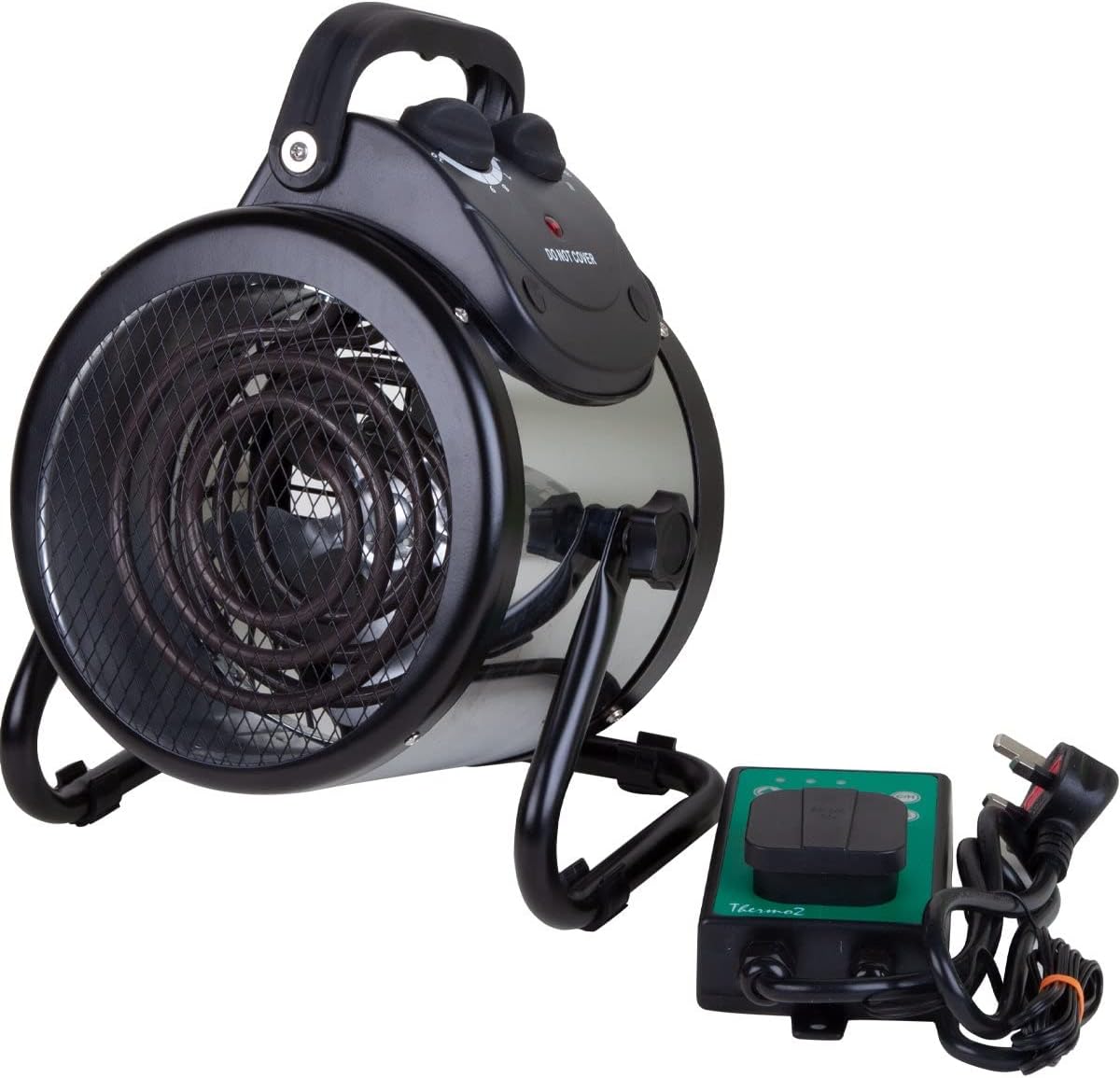

Frost-free greenhouse
BioGreen Palma greenhouse heater with digital thermostat
A splash-proof (IPX4) electric fan heater built for greenhouses. Set the thermostat to about 5°C for pelargoniums and overwintering chillies, a few degrees higher if citrus share the space, and it only runs when it needs to. Use an outdoor-rated socket with RCD protection.
View on Amazon

Halve the heating
Elixir Gardens greenhouse bubble insulation, 1.5m × 10m
Proper horticultural bubble insulation: UV-stabilised, triple laminated, large bubbles, made to be pinned inside the glass from October to March. It keeps the night’s warmth in and makes a small heater go a great deal further.
View on Amazon

For spring, before your safe date
EarlyGrow heated medium propagator
For the other end of the season. A heated base (around 16–21°C) and a vented lid for starting tomatoes, chillies and squash indoors in March and April, so they’re a good size by your safe planting-out date. Made in the UK.
View on AmazonMore for the garden this season
- Weekend gardening — what to plant now, the easiest veg to grow and this month’s jobs.
- When to plant garlic in the UK — the crop that wants a cold winter.
- Growing tomatoes from seed — timed back from your safe planting-out date.
- The best house plants for every room — for the tender things that live indoors all year.
- Hedgehog houses — where to put one before they hibernate.
Updated 3 October 2026. Frost dates calculated by Saturday & Sunday from Met Office HadUK-Grid data; gardening guidance checked against the RHS.