

Prune lavender once a year, straight after it finishes flowering: usually late July or August for English lavender, and a little later for the taller lavandins. Remove the flower stalks and cut about a third into the leafy growth, but never into the bare, woody stems, which rarely regrow. French lavender is trimmed after its first flush of flowers, and no lavender should be cut back hard in autumn.
By Linda Garrould · Updated 3 October 2026 · Checked against RHS and specialist-nursery guidance
The short version
- English lavender (‘Hidcote’, ‘Munstead’ and most compact lavenders): cut back as soon as the flowers fade, usually late July to August.
- Lavandins (taller, long-stemmed, flowering later, such as ‘Grosso’): after flowering, August to early September.
- French lavender (the “rabbit ears” on top of each flower): cut back after the first flush, deadhead through the summer, and stop by early September.
- How far: all the flower stalks, plus about a third of the leafy growth. Always leave green shoots below the cut.
- Reading this in October? It is too late for a proper cut. Snip off the old flower stalks if you like, leave the rest until a light tidy in spring, and make the main cut next summer.
Lavender is one of the easiest plants in the garden to look after, and also one of the easiest to spoil. The usual story is a few years of tidy grey mounds, followed by a sprawling plant with a bald, woody middle and flowers on the end of long, bare stems. That decline is not inevitable. It comes from pruning at the wrong time, or not pruning at all, and it can be prevented with one cut a year at the right moment. The guidance below is checked against the Royal Horticultural Society and Downderry Nursery, the Kent specialist that held a National Collection of lavender for many years and still publishes its growing guidance online.
The one rule
Cut in the green, never in the brown
Lavender rarely makes new shoots from old, bare wood, so every cut must leave some green, leafy growth below it. The RHS puts it plainly: lavender does not break new growth easily from old stems, so do not cut back into the woody stems. Everything else in this guide follows from that.
How hard to go within the green is where the experts differ. The RHS minimum is the spent flower stalks plus about 2.5cm (1in) of leafy growth. Downderry Nursery goes much harder on established plants, to about 22cm (9in) from the ground or roughly a third into the foliage, provided there is a good scattering of small shoots visible below the cut. Our advice: start nearer the RHS on a plant you are unsure of, and work towards the specialist’s harder cut on healthy, vigorous plants. A firmer cut each summer is what keeps the plant from going leggy.
A cut a week late does far less harm than one into bare wood.
Know your plant
Which lavender have you got?
Pruning dates depend on the type, and most labels are long gone by the time the question comes up. This table brings together what is usually scattered across plant labels, RHS plant entries and nursery catalogues.
| Type | How to recognise it | When to prune | Hardiness and lifespan |
|---|---|---|---|
| English lavender L. angustifolia, e.g. ‘Hidcote’, ‘Munstead’ |
Compact; narrow grey-green leaves; short stems with dense flower spikes, usually from June or July | Straight after flowering, late July to August; optional light spring tidy | Hardy (RHS H5 for ‘Hidcote’). Up to 20 years, about half that on heavy clay (Downderry) |
| Lavandin L. × intermedia, e.g. ‘Grosso’ |
Larger plant; long flower stems held well above the leaves; flowers later, often into August | After flowering, August to early September | Hardy (RHS H5 for ‘Grosso’) |
| Late-flowering lavandins e.g. the Dutch Group |
Still flowering as autumn arrives | Remove the flower stems after flowering, then prune into the foliage in March, once growth starts (Downderry) | Hardy |
| French or Spanish lavender L. stoechas |
Plump flower heads topped with petal-like “ears”; flowers from late spring | After the first flush of flowers; deadhead after that; not after early September | Less hardy (RHS H4); typically 5 to 10 years (Downderry) |
| Fringed lavender L. dentata |
Leaves with toothed, scalloped edges (the RHS also calls this French lavender) | Deadhead through the season, with an occasional harder trim | Half-hardy (RHS H3): mild coastal gardens, or a pot brought under cover in winter |
The calendar
When to prune lavender, month by month
March to April: an optional light trim of untidy or frost-damaged foliage once new growth begins, and the main prune for late-flowering lavandins. June to July: cut stems for drying while the buds are coloured but unopened; trim French lavender after its first flush. Late July to August: the main prune for English lavender, as soon as the flowers fade. August to early September: the main prune for lavandins. October to February: leave lavender alone, apart from removing any old flower stalks.
Step by step
How to prune English lavender
- Wait for the flowers to fade. Do not wait for the seed heads to turn brown: the sooner you cut, the longer the plant has to make new growth before winter. If bees are still busy, give it a few more days.
- Find the green. Part the stems and look for the point where the leafy shoots end and the bare wood begins. That is your floor.
- Take off the flower stalks all over the plant.
- Cut into the leaves. With shears, gather a handful of stems in one hand and cut across them, taking about a third off the leafy growth on an established plant, and always leaving small green shoots below the cut.
- Shape a mound. Aim for a neat, rounded dome rather than a flat top. Rain runs off it, and the new growth comes evenly from all over the plant.
On one or two established plants it is a short job, and the plant should put on fresh grey-green growth before winter.
Other types
Pruning lavandin, French and tender lavenders
Lavandins (Lavandula × intermedia) are the big, scented lavenders grown commercially for oil, with long stems and a later flowering. Prune them in the same way as English lavender, after flowering, usually in August or early September. A few late flowerers, including the Dutch Group, are still in bloom as autumn arrives. For those, Downderry advises removing the flower stems once flowering ends and leaving the main cut into the foliage until March, once growth starts.
French lavender (Lavandula stoechas) flowers earlier, from late spring, and in flushes. Cut it back firmly once the first flush fades, still staying in the green (Downderry suggests to about 22cm), then deadhead through the summer to keep it flowering. Gardeners’ World advises no pruning later than early September, and Downderry no later than mid-September, so that new growth can harden before winter. It is less hardy than English lavender, often short-lived, and does best in a sheltered, sunny spot with very sharp drainage.
Tender lavenders, such as fringed lavender (L. dentata), are deadheaded through the season with an occasional harder trim. Most UK gardeners grow them in pots and move them under cover for the winter.
Spring
Should you prune lavender in spring?
A light trim, yes; a hard cut, no. The RHS allows foliage to be clipped over in spring if growth is untidy or frost-damaged. Wait until new growth is starting (usually late March or April) so you can see what is alive, and keep the trim shallow. Spring is also the moment to rescue a plant whose summer prune was missed: cut it back only as far as the green shoots. The main cut still belongs in late summer.
Autumn
Why you should not cut back lavender in autumn
A hard autumn cut leaves soft new growth, or bare cut stems, exposed to the wet and cold of a British winter, and, as Downderry notes of the less hardy types, it is wet soil rather than frost that is more likely to kill them. On its plant entries for English lavender, lavandin and French lavender, the RHS advises against pruning in autumn in wet or cold regions, as it may leave plants vulnerable to winter damage. If you missed the summer prune, snip off the old flower stalks and wait for spring. In the north and in exposed gardens, where winters come earlier, it is especially worth making the main cut promptly, as soon as flowering ends.
New plants
Pruning young lavender plants
Growers generally start the habit in the first summer: pinch out or lightly trim the soft tips of a newly planted lavender, and remove the flower stalks after its first flowering. It feels a waste on a small plant, but this is what makes it branch from low down and form a dense, rounded shape, rather than a few tall stems that will be bare at the base in three years’ time. From the second summer onwards, prune it as an established plant.
Rescue or replace
What to do with leggy, woody lavender
The honest answer: it depends on whether there is any green left low down. The RHS view is that old, straggly, very woody plants are best replaced. Downderry suggests a test: prune to within a hand’s width of the bare wood and see whether the plant sprouts from lower down. The two are not in conflict. Look at the stems, and the plant tells you which advice applies.
Replacing a lavender need not cost anything. Take semi-ripe cuttings in early to midsummer from the healthiest non-flowering side shoots; young, vigorous growth roots best, so take more than you need from an old plant. They usually root well in gritty compost, and you will have young plants of exactly the same variety to put in the following spring.
Prevention
Why lavender goes woody, and how long it lasts
Every lavender becomes woody at the base with age. It happens faster when the plant is not pruned each year, is only ever pruned lightly, or grows in conditions it dislikes. Lavender wants full sun and sharp drainage. Rich, damp or shady ground makes it grow soft and leggy and shortens its life. In heavy clay, grow it in a raised bed or pot, or work in plenty of grit.
With a yearly prune and the right spot, English lavender lasts a long time: Downderry puts hardy types at up to 20 years. French and tender lavenders are shorter-lived and are often replaced every few years whatever you do.
Hedges
Pruning a lavender hedge
A lavender hedge is pruned exactly like a single plant, at the same time, straight after flowering. The only differences are scale and tools. Two-handed shears make quicker work of a long run, and a taut string line helps keep the top level. Shape the hedge with a gently rounded top rather than a flat, boxy one. For a new hedge, the RHS suggests spacing English lavenders about 30cm (1ft) apart, or 45cm (18in) for larger varieties. Downderry suggests 40 to 45cm apart for hedging lavenders that grow to about 60cm tall, so check the eventual height and spread on the label.
Pots
Pruning lavender in pots
Lavender in a container is pruned at the same time and in the same way as in the ground, after flowering. What keeps a potted lavender going is the pot itself. The RHS suggests a container at least 30 to 40cm across, filled with John Innes No. 2 compost with up to a quarter grit by volume. Downderry recommends terracotta for tender and dwarf lavenders, and advises watering sparingly between November and February. Move pots to a sheltered spot over winter, ideally against a sunny wall and raised on feet so they drain freely.
Harvest
Cutting lavender for drying, and leaving some for the bees
Cutting for drying and pruning are different jobs at different times. Downderry harvests lavender for the kitchen in full coloured bud, before the individual flowers open, and for drying just before full bloom: usually June or July for English lavender. Cut long stems, tie them in small bunches, and hang them upside down in a dry, dark, airy room.
The flowers you leave are a gift to bees and other pollinators through high summer, so there is a happy compromise. Cut some stems early for the house, let the rest flower, and prune as soon as the flowers fade and the bees have moved on. The RHS adds that a few spent flower heads left late in the season are food for seed-eating birds.
The kit
The lavender-pruning kit worth buying
For one or two plants, a pair of sharp one-handed shears does the whole job: gather a bunch of stems in one hand and cut across them. A hedge needs two-handed shears. Keep secateurs for shaping, for cutting stems to dry, and for careful work near the base, where shears can easily bite into the wood. Whatever you use, keep it sharp: blunt blades tear the stems.
Affiliate links: as an Amazon Associate, Saturday & Sunday earns from qualifying purchases. It costs you nothing extra and helps keep the site running. We chose these on specification and the makers’ reputations; no brand paid to be included. Availability and links were checked on 3 October 2026 and can change.
For cutting


Darlac compact one-handed shears
Light, one-handed shears that let you gather a handful of stems in the other hand and cut cleanly across them. Sized for a few lavender plants rather than a long hedge.


Spear & Jackson Razorsharp hand shears
Full-size, two-handed hedge shears for a lavender hedge or a long edge, where one-handed shears would take all afternoon.


Felco No. 6 compact secateurs
For shaping, for cutting stems for drying, and for careful work near the woody base, where shears can bite too deep. Sized for smaller hands.
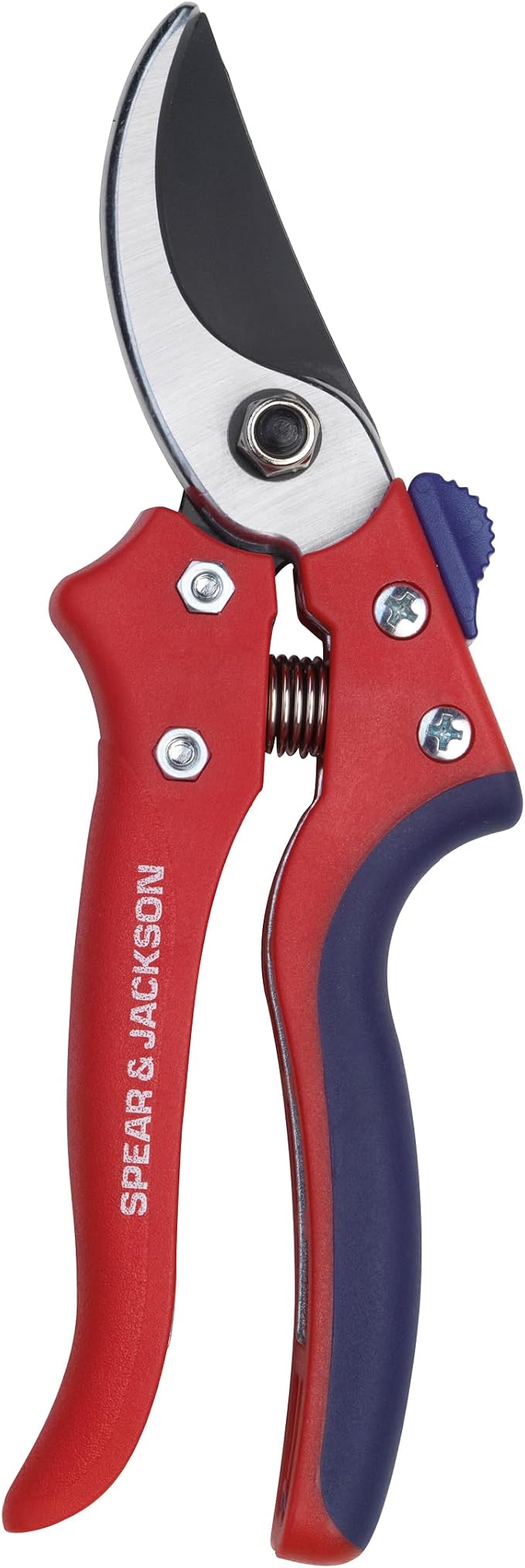

Spear & Jackson Razorsharp Advantage bypass secateurs
The good-value pair. A few lavender plants do not need professional secateurs, but they do need sharp ones.
For planting and replacing


Melcourt horticultural potting grit (1–4mm)
For mixing into the compost when you plant lavender in a pot, or into heavy soil in the border. Lavender needs sharp drainage to stay compact and live long.


English lavender (Lavandula angustifolia) plants
Young plants of the hardy English species, for replacing a lavender that has gone past saving or for starting a low hedge. Plant in spring in a sunny, well-drained spot.
More from the gardening calendar
- When to prune roses: every type, every month, and the cut that counts.
- When to prune apple trees: winter for free-standing trees, summer for trained ones.
- When to prune hydrangeas: old wood or new wood, and why it matters.
- Drought-tolerant plants for UK gardens: lavender’s companions for a dry, sunny bed.
- A day out at Norfolk Lavender: to see the fields in flower.
Common questions
Lavender pruning: frequently asked questions
When should I prune lavender in the UK?
Straight after it finishes flowering, which for English lavender is usually late July or August, and for the taller lavandins August or early September. French lavender is trimmed after its first flush of flowers in early summer. Avoid hard pruning in autumn and winter.
Should I cut back lavender in autumn or spring?
Neither, for the main cut: the right time is late summer, just after flowering. In spring you can lightly clip over untidy or frost-damaged foliage once growth starts, but do not cut back hard. Autumn pruning, especially in cold or wet gardens, leaves the plant vulnerable to winter damage.
Is it too late to prune lavender in September or October?
Early September is fine for a lavandin that has only just finished. By October it is too late for anything more than removing old flower stalks: leave the plant alone through winter, tidy it lightly in spring, and plan the proper cut for next summer.
How far back should I cut lavender?
Remove all the flower stalks and cut into the leafy growth, by about a third on an established plant, making sure some small green shoots remain below every cut. Never cut into the bare, woody stems at the base.
What happens if you cut lavender into old wood?
Usually nothing grows back. Lavender rarely produces new shoots from bare, woody stems, so a cut into old wood can leave a permanent bald patch or kill that part of the plant.
Can you save woody or leggy lavender?
Sometimes. If there are small green shoots within a hand’s width of the bare wood, cut back to just above them and see how the plant responds. If the lower stems are completely bare, it is unlikely to regrow: take cuttings and replace the plant.
How do you prune French lavender?
Cut French lavender (Lavandula stoechas) back firmly after its first flush of flowers fades in early summer, staying in the green, then deadhead as it reflowers. Do not prune it later than early to mid-September, and never cut into bare wood. It is less hardy and shorter-lived than English lavender.
Do you deadhead lavender?
English lavender is not usually deadheaded: the annual late-summer prune removes the spent flowers. French lavender benefits from deadheading through the summer to keep it flowering. You can leave some seed heads late in the season for birds.
Should I prune lavender in its first year?
Lightly, by most growers’ advice. Pinch out or lightly trim the soft tips of a newly planted lavender, and remove the flower stalks after its first flowering, to encourage a bushy, compact plant from the start.
When should I cut lavender for drying?
Just before the flowers are in full bloom, when most of the buds are coloured, typically June or July for English lavender. Cut long stems, tie them in small bunches, and hang them upside down somewhere dry and dark.
How long do lavender plants live?
English lavenders can live for many years if pruned every summer; the specialist Downderry Nursery advised that hardy types can last up to 20 years. French and other tender lavenders are shorter-lived and often need replacing after a few years.
Why has my lavender gone woody?
Lavender naturally becomes woody at the base with age, but it happens faster when the plant is not pruned each year, is pruned too lightly, or grows in rich, damp or shady soil. Annual pruning after flowering, a sunny spot and sharp drainage keep it compact for longer.
Written by Linda Garrould. Checked against Royal Horticultural Society and Downderry Nursery guidance. First published 3 October 2026.
GardeningLavenderPruningUK garden calendar


0 Comments